Labels
'And out of the ground the Lord God formed every beast of the field, and every fowl of the air; and brought them unto Adam to see what he would call them; and whatsoever Adam called every living creature that was the name thereof.' Genesis 2:19
If we interpret the sequence of scriptures to represent a chronological sequence, shortly after Adam was created, God and Adam engaged in some kind of naming exercise. Naming critters is what taxonomists (not taxidermists) do. Thus, any taxonomist could legitimately claim, at least based on the Bible, that their profession was ordained of God. Not too many other people could say that. Adam seemed to be naming things before doing anything else.
While I would most happily espouse the value of taxonomy and the absolute need for it as a continuing science across disciplines, this is not what I really want to comment on. I want to talk about this process of naming or labeling things.
We put labels on objects, any object, so as to identify it from other objects. It creates a concept that we then can relate to and talk about with others. Regardless of the language used, a label for 'cow' identifies it as something different than a 'horse'. It is a perfectly natural thing to do. I expect that Adam and Eve probably would have started naming things even without direction from God.
Regardless of the level of divine intervention in the process, humans have become great at labeling and re-labeling things. We've got names for everything; sometimes more than one for the same thing. Mostly these labels are useful. Sometimes they are not, even though the purpose of the label is the same i.e. to distinguish it from another object.
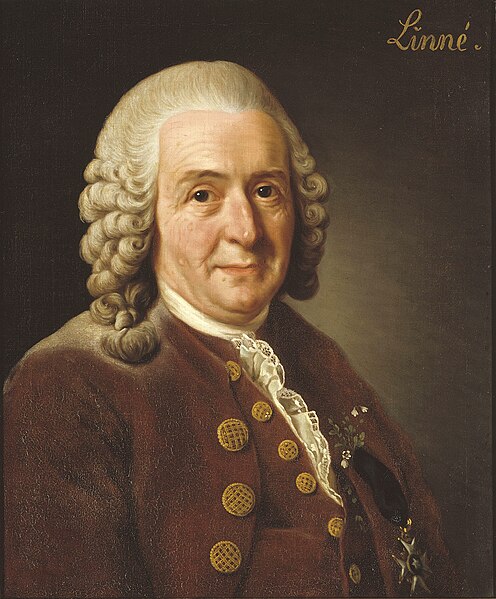 Let us consider for a moment the first level at which we are labeled i.e. to which species we belong. Most folks know they are human beings. Linnaeus, labeller extraordinaire, in 1758 created the label for our species, Homo sapiens sapiens. I was taught that this Latin name is translated to mean 'wise wise man.' I think Linneaus was off the mark there a little bit but maybe he was making a joke. In spite of his motivations or rationale, that's the name we have and it has stuck. It would be nice if we lived up to it. But, back to the topic at hand....
Of course the distinction of being human was made long before Linnaeus gave us a fancy scientific name following his rules of binomial nomenclature. God called us 'man' and the name seemed to stick. Any baby born is usually identified as 'mankind' even if there isn't a place on the birth certificate to note this very important fact. There's probably a microsecond long unconscious assessment by the doctors at birth to assure the humanity of the recently born .. after that, other labels are usually applied.
The next level of human labeling that occurs is usually, related to the private bits, i.e. whether the individual is a girl or boy. Obviously, this is an important criterion because this is the major driver of what 'name' the person is given.
We can generate more labels based on skin color, race, religion, marital status, sexual orientation, reproductive status; and the list goes on. We even have labels we apply to each other based on medical conditions or other conditions: diabetic, ADHD, autistic, obese, parapalegic, unattractive, smelly; the latter two being more subjective. Some of the other interesting quasi-subjective labels that get assigned include: believer, non-believer, infidel, heretic, apostate. Of course, some of these labels get applied much later in life. One would not expect to label a baby as a 'wife' immediately after it was born. So we end up with a dizzying array of ways in which we can distinguish one object or in this case, person, from another person. Are any of these useful distinctions?
Think about it for a moment, imagine yourself at a meeting. A person walks into the room that you don't recognize, within the first five seconds (or less) you will have assessed the gender, skin color, and race of the person and applied the appropriate labels to that mental image you now have in your head. You spend a little longer looking at the person and in that time pick up on a variety of other clues about that person. Now if your brain uses that information to help you distinguish that person from all the other people you know then there's really not a problem. But, if in addition to helping you identify the person, your brain attaches/associates certain assumptions along with those labels then you have already formed an impression of who that person is and what they are like and you don't even know their name yet.
I expect our brains are very good at doing such things because it is adaptive. It only makes sense that a human living in a natural environment should make a very quick identification of a creature that looks like a snake, have some kind of automatic assessment of that creature and behave accordingly. Even to be able to distinguish between different human groups could be useful for survival.
But outside of any 'survival only' existence, any person who walks into a meeting is simply a person, Homo sapiens sapiens. The rest is really irrelevant; or it should be. I don't recall that assigning all the other labels was part of Adam's portfolio of responsibilities.
If we interpret the sequence of scriptures to represent a chronological sequence, shortly after Adam was created, God and Adam engaged in some kind of naming exercise. Naming critters is what taxonomists (not taxidermists) do. Thus, any taxonomist could legitimately claim, at least based on the Bible, that their profession was ordained of God. Not too many other people could say that. Adam seemed to be naming things before doing anything else.
While I would most happily espouse the value of taxonomy and the absolute need for it as a continuing science across disciplines, this is not what I really want to comment on. I want to talk about this process of naming or labeling things.
We put labels on objects, any object, so as to identify it from other objects. It creates a concept that we then can relate to and talk about with others. Regardless of the language used, a label for 'cow' identifies it as something different than a 'horse'. It is a perfectly natural thing to do. I expect that Adam and Eve probably would have started naming things even without direction from God.
Regardless of the level of divine intervention in the process, humans have become great at labeling and re-labeling things. We've got names for everything; sometimes more than one for the same thing. Mostly these labels are useful. Sometimes they are not, even though the purpose of the label is the same i.e. to distinguish it from another object.
Let us consider for a moment the first level at which we are labeled i.e. to which species we belong. Most folks know they are human beings. Linnaeus, labeller extraordinaire, in 1758 created the label for our species, Homo sapiens sapiens. I was taught that this Latin name is translated to mean 'wise wise man.' I think Linneaus was off the mark there a little bit but maybe he was making a joke. In spite of his motivations or rationale, that's the name we have and it has stuck. It would be nice if we lived up to it. But, back to the topic at hand....Of course the distinction of being human was made long before Linnaeus gave us a fancy scientific name following his rules of binomial nomenclature. God called us 'man' and the name seemed to stick. Any baby born is usually identified as 'mankind' even if there isn't a place on the birth certificate to note this very important fact. There's probably a microsecond long unconscious assessment by the doctors at birth to assure the humanity of the recently born .. after that, other labels are usually applied.
The next level of human labeling that occurs is usually, related to the private bits, i.e. whether the individual is a girl or boy. Obviously, this is an important criterion because this is the major driver of what 'name' the person is given.
We can generate more labels based on skin color, race, religion, marital status, sexual orientation, reproductive status; and the list goes on. We even have labels we apply to each other based on medical conditions or other conditions: diabetic, ADHD, autistic, obese, parapalegic, unattractive, smelly; the latter two being more subjective. Some of the other interesting quasi-subjective labels that get assigned include: believer, non-believer, infidel, heretic, apostate. Of course, some of these labels get applied much later in life. One would not expect to label a baby as a 'wife' immediately after it was born. So we end up with a dizzying array of ways in which we can distinguish one object or in this case, person, from another person. Are any of these useful distinctions?
Think about it for a moment, imagine yourself at a meeting. A person walks into the room that you don't recognize, within the first five seconds (or less) you will have assessed the gender, skin color, and race of the person and applied the appropriate labels to that mental image you now have in your head. You spend a little longer looking at the person and in that time pick up on a variety of other clues about that person. Now if your brain uses that information to help you distinguish that person from all the other people you know then there's really not a problem. But, if in addition to helping you identify the person, your brain attaches/associates certain assumptions along with those labels then you have already formed an impression of who that person is and what they are like and you don't even know their name yet.
I expect our brains are very good at doing such things because it is adaptive. It only makes sense that a human living in a natural environment should make a very quick identification of a creature that looks like a snake, have some kind of automatic assessment of that creature and behave accordingly. Even to be able to distinguish between different human groups could be useful for survival.
But outside of any 'survival only' existence, any person who walks into a meeting is simply a person, Homo sapiens sapiens. The rest is really irrelevant; or it should be. I don't recall that assigning all the other labels was part of Adam's portfolio of responsibilities.

